Kiwi Ripening Checklist: From Rock-Hard to Ready
A rock-hard kiwifruit is one of the small frustrations of the fruit bowl. You cut it open, the flesh is pale and chalky, and it tastes like a lime that has given up. The good news is that kiwis ripen reliably on a kitchen counter, and you can nudge them along with fruit you probably already have. What follows is a practical checklist for telling when a kiwi is ready, plus a few ways to get it there faster.
Why your kiwis arrive hard
Kiwifruit keep ripening after they are picked. They respond to ethylene, the same natural ripening gas given off by bananas, apples, pears and tomatoes. Growers and shops use this to their advantage by storing kiwis cool, which slows the process to a crawl. A kiwi that has travelled in a chilled container can sit in your fruit bowl looking completely unchanged for a week — then soften all at once, seemingly overnight.
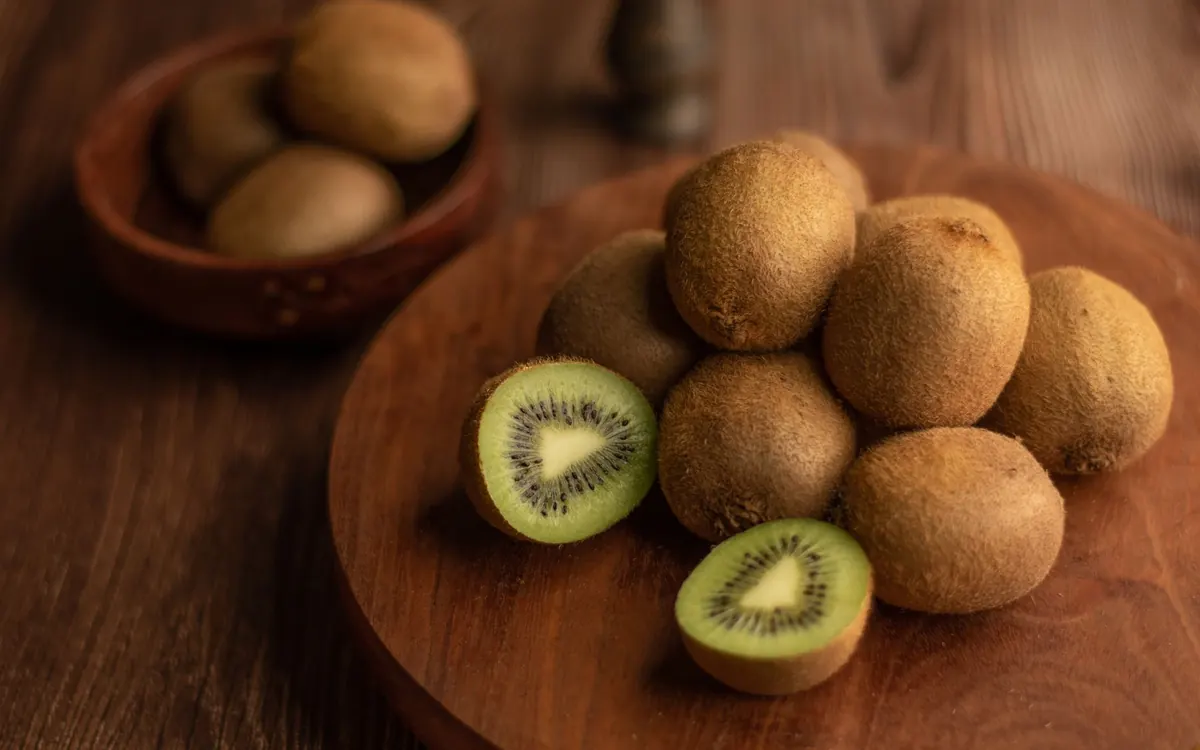
Two types dominate UK shops. The familiar fuzzy green one, often sold as Hayward, is tangy and firm-fleshed, with a white core that stays chalky until the fruit is properly ripe. Golden kiwis have smoother, thinner skin, sweeter and less acidic flesh, and tend to soften a little sooner. They also bruise more easily, so handle them gently.
The ripeness checklist
Work down this list and you will rarely get it wrong. The first three tests you can do without cutting anything open.
- Thumb press at the stem end. This is the single most reliable test. A ripe kiwi gives slightly under gentle pressure, the way a ripe peach does, then springs back. Rock-hard means wait. If your thumb leaves a dent that stays put, it is past its best.
- Weight in the palm. A ripe kiwi feels heavy for its size, and the skin is taut rather than shrivelled. Wrinkled skin usually means it has been hanging around too long, so suspect overripe rather than underripe.
- The stem end. There is a small, soft dip around the stem on a ripe fruit. If the stem area gives but the middle is still hard, the kiwi is ripening unevenly and needs another day.
- Smell it at room temperature. Cold kiwis smell of very little. A ripe one has a faint sweet, floral scent, a bit like strawberry crossed with banana. A sharp or fermented smell means it has gone too far.
- Cut one open. The best confirmation. Ripe flesh is juicy and slightly translucent around the seeds, the seeds sit loose, and the core is soft enough to eat with a spoon. A hard, chalky white core means underripe, no matter how the outside feels.
- Taste it. The final word. A ripe kiwi is sweet with a clean tang. An unripe one is sour and leaves your mouth feeling furry.
Speeding things up with a banana or an apple
Ethylene is the lever. Put firm kiwis in a paper bag or a bowl with one ripe banana or one ripe apple, cover loosely with the folded bag or a tea towel, and leave them at room temperature. The gas builds up around the fruit and ripens it faster than leaving it out alone — usually two to four days rather than a week or more.
Getting the details right
- One ripe banana or apple is plenty for three to five kiwis. Adding more does not speed things up much.
- Use ripe fruit, not green. A yellow, freckled banana is producing plenty of ethylene; a hard green one is producing almost none.
- Keep it loose. A sealed plastic bag traps moisture and invites mould. A paper bag, or a bowl with a cloth over it, lets a little air move while the gas still accumulates.
- Watch the temperature. A kitchen at around 18–22°C ripens fruit steadily. A cold utility room or garage will stall it again, and a radiator or sunny windowsill is too much.
- Check daily and pull out the kiwis as they soften, because once ripe they carry on racing.
- If the bag feels damp inside, open it for an hour or swap it for a dry one.
Slow things down once they are ready
Ripe kiwis go into the fridge, where they will hold for about a week, sometimes a little longer. Cold does not stop ripening, it just presses pause.
- Keep ripe kiwis away from the banana-and-apple bag, ideally in a different drawer, or they will keep catching ethylene.
- Do not wash them until you are about to eat them. Damp skin encourages mould.
- Store them loose rather than piled, so air can move and bruises do not spread.
- Sort by firmness: keep the softest ones out for the next day or two and chill the rest.
- To freeze, peel and slice, spread the pieces on a tray, freeze, then bag them. They turn soft on thawing, so save them for smoothies and baking.
If you overshoot, or need one right now
An overripe kiwi — wrinkled skin, collapsing flesh, a fermented smell — is still useful as long as there is no mould. Scoop it into yoghurt, blend it into a smoothie, cook it down into chutney or jam, or mash it into a marinade for pork or chicken. Kiwifruit contains an enzyme that tenderises meat, so keep the marinating time short or the surface will turn to mush.
Needing a rock-hard kiwi right now is harder. There is no shortcut that leaves the texture intact, and a few seconds in the microwave cooks rather than ripens. If you are determined, peel it and slice it thinly, leave the slices for half an hour, then use them where crunch is welcome: a slaw, a salsa, or a fruit salad with something sweeter alongside. The acidity is real, but so is the texture.
Golden kiwis follow the same rules with one adjustment: they soften faster and bruise sooner, so test them gently and eat them within a day or two of ripening. Cut fruit will not ripen any further, so once a kiwi is sliced it is for eating, not for waiting.
The two-minute kiwi routine
Buy them firm; that is normal. Leave them on the counter with one ripe banana, check daily with a thumb press near the stem, and move each one to the fridge the moment it gives. Keep one out for tomorrow's breakfast and the rest cold. That is the whole method — warmth and ethylene to ripen, cold to hold, and a thumb to tell you which stage you are at.
Photo: Pranjall Kumar / Pexels