Vegetable Care: How to Ripen Peppers and Chillies After Harvest
A cold snap is forecast, the plants are still loaded with green fruit, and you have a decision to make: pick now and hope, or gamble on another fortnight of mild weather. Picking is usually the right call. A pepper harvested at the right stage will keep changing colour on a kitchen worktop, and its flavour will deepen as it does. It will not be identical to one that ripened on the plant, but it is a long way from a wasted crop.
Here is how to get the most colour and flavour out of harvested peppers and chillies, using nothing more exotic than a cardboard box, a paper bag and a bit of patience.
Why a picked pepper can still change
The Capsicum family — everything from bell peppers to bird's eye chillies — does not ripen like a banana or an avocado. It is not a fruit that suddenly floods with ethylene and softens on the counter. Most of the sugar and flavour development happens on the plant, and once a pepper is cut, that part of the process largely stops.
What does continue is colour. The pigments that turn a green pepper red, orange, yellow or deep purple keep developing for a while after harvest, provided the fruit is warm enough and the tissue is still sound. Water loss does the rest: as the pepper sheds a little moisture, its flavour concentrates and the flesh tastes sweeter, even though the sugars themselves are barely increasing.
Heat is a similar story. A chilli that colours up on your worktop will not become noticeably hotter than it was when you picked it. So pick at the right stage, keep them warm, and you can turn a decent crop into a much better one. Pick too early and no amount of fussing will help.
Pick the right ones
Look for what growers call colour break. That is the stage where green starts to give way to streaks, patches or a blush of the final colour — a red bell with faint crimson shoulders, a jalapeño with a purple tinge, a habanero turning a dull orange. These fruits have already done the hard work and will finish the job indoors.
Leave the rest
Small, hard, uniformly green peppers with no hint of change are immature. They usually just shrivel, or sit there until they rot. Eat them green, slice them into a stir-fry, or pickle them. They are not ripening candidates.
Handle them properly
Cut with a short length of stalk attached, about a centimetre, because the stem seals the fruit and slows moisture loss. Do not wash them before ripening; damp skin invites mould. If they are grubby, wipe them with a dry cloth. Handle gently, too — bruised peppers rot first.
The basic indoor setup
You do not need equipment. You need warmth, airflow and a way to inspect the fruit every day.
- Keep them out of the fridge. Cold below roughly 7°C shuts colour development down and causes chilling injury — pitted, watery patches that never recover. Ripen at room temperature first.
- Use a single layer. A shallow cardboard box, a wooden tray, a wire rack or a paper bag with the top folded over. Piling fruit traps moisture and heat where you do not want them.
- Find a spot at around 18–24°C. A kitchen worktop, a spare room, a cupboard door left ajar. Warmth speeds things along; above roughly 27°C they soften and rot rather than colour.
- Keep them out of direct sun. Light is not needed for ripening, and sunlight heats the skin unevenly, causing soft patches.
- Check daily. Turn them, feel for soft spots, and remove anything that has started to go.
Expect anything from five days for thin-skinned chillies already on the turn to two or three weeks for a big, thick-walled bell pepper. Slight wrinkling is fine and normal. Slimy is not.
Speed things up with ethylene
Peppers are not especially responsive to ethylene, but they are not deaf to it either. If you want to hurry a batch along, drop a ripe banana, apple, tomato or avocado into the paper bag with them. These release ethylene gas, which encourages colour change and softening.
Two warnings. First, do not seal the bag airtight — you want the gas concentrated, not the moisture. Second, do not leave the fruit in there for weeks on end. Check every day, because the same gas that speeds up colour also speeds up decay.
Thick walls or thin walls
Not every chilli is worth ripening on a tray. Thick-walled fruits hold moisture and ripen well indoors. Thin-walled ones dry faster than they colour and are better strung up or dried outright.
- Ripen indoors: bell peppers, jalapeños, serranos, habaneros, Scotch bonnets, poblanos and other thick-fleshed types.
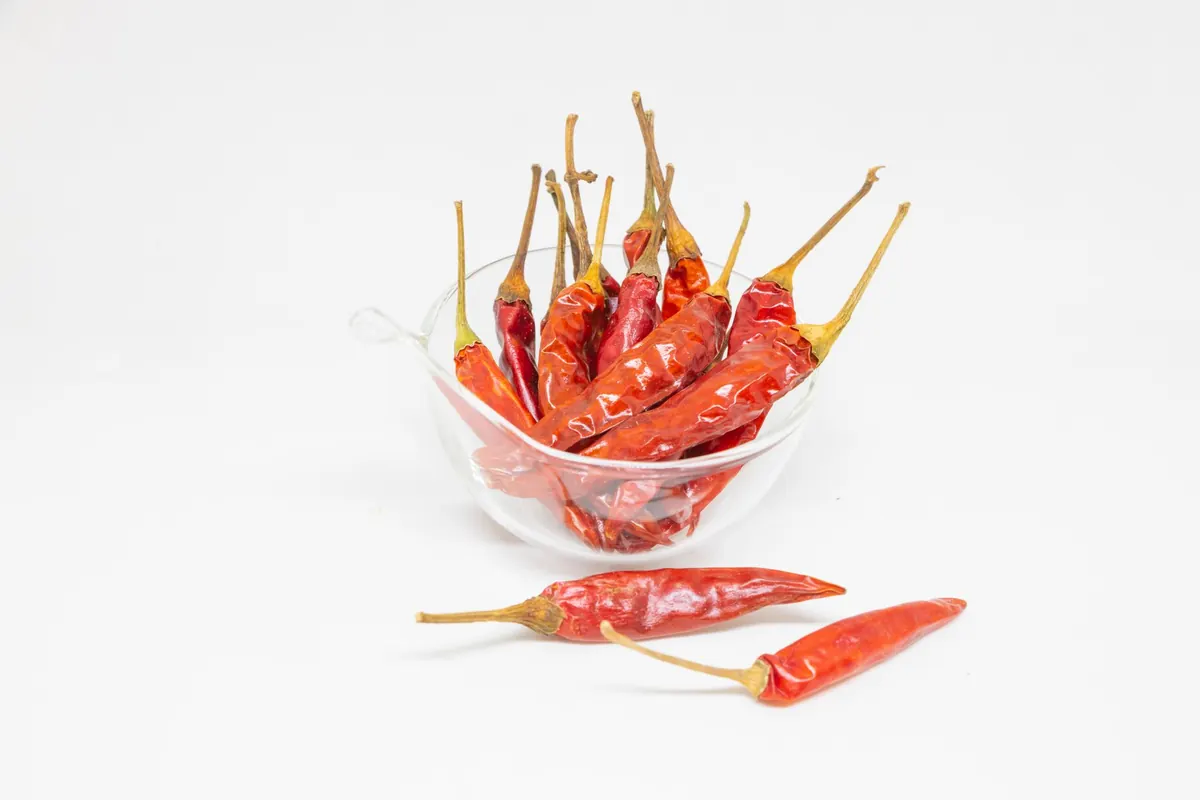
- Dry instead: cayenne, bird's eye, Thai and other thin-skinned chillies. Thread them onto cotton, hang them somewhere dry and airy, or dry them in a low oven or a dehydrator.
- Freeze either way: whole chillies freeze well for cooking. Freezing stops ripening completely, so colour them up first if that is what you are after.
When things go wrong
Mould is the main risk, and it moves quickly through a crowded tray.
- Soft brown or black patches — remove that fruit immediately and inspect its neighbours.
- Furry grey mould — bin that pepper and anything touching it. Do not try to cut around it.
- Condensation inside the bag or box — open it up, wipe it dry and space the fruit out.
- Shrivelled but firm — perfectly fine. Use it soon, or roast and freeze it.
- Colour stalled after two weeks — the fruit was probably picked too early. Use it green.
Once they have coloured up
A fully coloured pepper is ripe and will not improve further. Move it to the fridge salad drawer in a paper bag or a perforated bag, where it will hold for a week or two. Chillies can go the same way, or be frozen whole, chopped, or blitzed into a paste and frozen in ice-cube trays.
If you have a glut, roasting is the best use of a big batch: blacken the skins under a hot grill, steam them in a covered bowl, peel, then pack into portions for the fridge or freezer. And if you are saving seed from a favourite chilli, take it from a fruit that coloured fully — seed inside a green pepper is not mature. A little warmth, a little airflow and a daily look is all this takes.
Photo: Srattha Nualsate / Pexels