Seasonal UK Fruit Ripening Calendar: What to Pick and When
British fruit seasons are not a single calendar. A strawberry in a Cornish garden can be ready three weeks before one in Aberdeenshire, and a wet June can push everything back. Watch the plant, not just the date. This month-by-month guide covers the main UK crops, when to pick them, and how to treat each one after it leaves the tree or bush. Some fruits ripen on a kitchen windowsill; others are as good as they will ever be the moment you pick them. Knowing the difference saves waste and gives better flavour.
Spring: Rhubarb, Early Strawberries and the First Currants
Spring starts slowly. Forced rhubarb appears in Yorkshire sheds from January, but outdoor rhubarb is usually ready from April. Pull stalks rather than cutting them, and choose ones that are long and firm. Rhubarb does not ripen after picking, so cook it soon; thick green stalks will be tougher and more sour.
Strawberries under cloches or in a polytunnel can be ready in late May. Pick them when they are uniformly red and smell sweet. Strawberries are non-climacteric: they will not ripen further once picked. A pale or white-shouldered berry will stay that way, though it may soften. Use those for jam or coulis.
Early gooseberries and blackcurrants arrive towards the end of the season. Taste one gooseberry before you pick the lot: green varieties are tart and firm, dessert varieties turn pink and sweet. Currants should be picked when fully coloured and they come away easily. Refrigerate them unwashed.
Early Summer: Strawberries, Gooseberries and Currants
June and early July are the busiest months for soft fruit. Strawberries reach their peak, followed by gooseberries, redcurrants, white currants, blackcurrants and jostaberries. Pick in the cool of the morning, when the fruit is firm and dry. Handle berries gently; they bruise easily and mould follows bruises.
None of these soft fruits ripen after picking. They may soften on the counter, but they will not gain sugar. If you have picked them underripe, spread them in a single layer at room temperature for a day, then eat or cook them. Do not leave them in direct sun. Underripe currants and gooseberries make excellent jam, fools and cordials.
Refrigerate soft fruit as soon as you get it home. Wash only just before eating.
High Summer: Cherries, Raspberries, Blueberries and Plums
July and August bring cherries, raspberries, blueberries, tayberries, loganberries and the first plums. Cherries and raspberries are non-climacteric. Pick cherries when they are dark, glossy and taste sweet; they will not improve after picking. Raspberries should slide off the plug easily. If you have to tug, they are not ready.
Blueberries are ready when fully blue with a dusty bloom and they fall into your hand. They soften after picking but do not become sweeter. Keep them cool.
Plums, gages and damsons are different. They are climacteric, which means they continue to ripen after harvest. Pick them when they are mature but still firm, with a little give at the stem end. Ripen them at room temperature in a single layer. A paper bag speeds things up; adding a ripe banana or apple increases the ethylene gas around them. Check daily, because they turn quickly. Once they smell sweet and yield to gentle pressure, move them to the fridge.
Late Summer to Early Autumn: Apples, Pears, Blackberries and Damsons
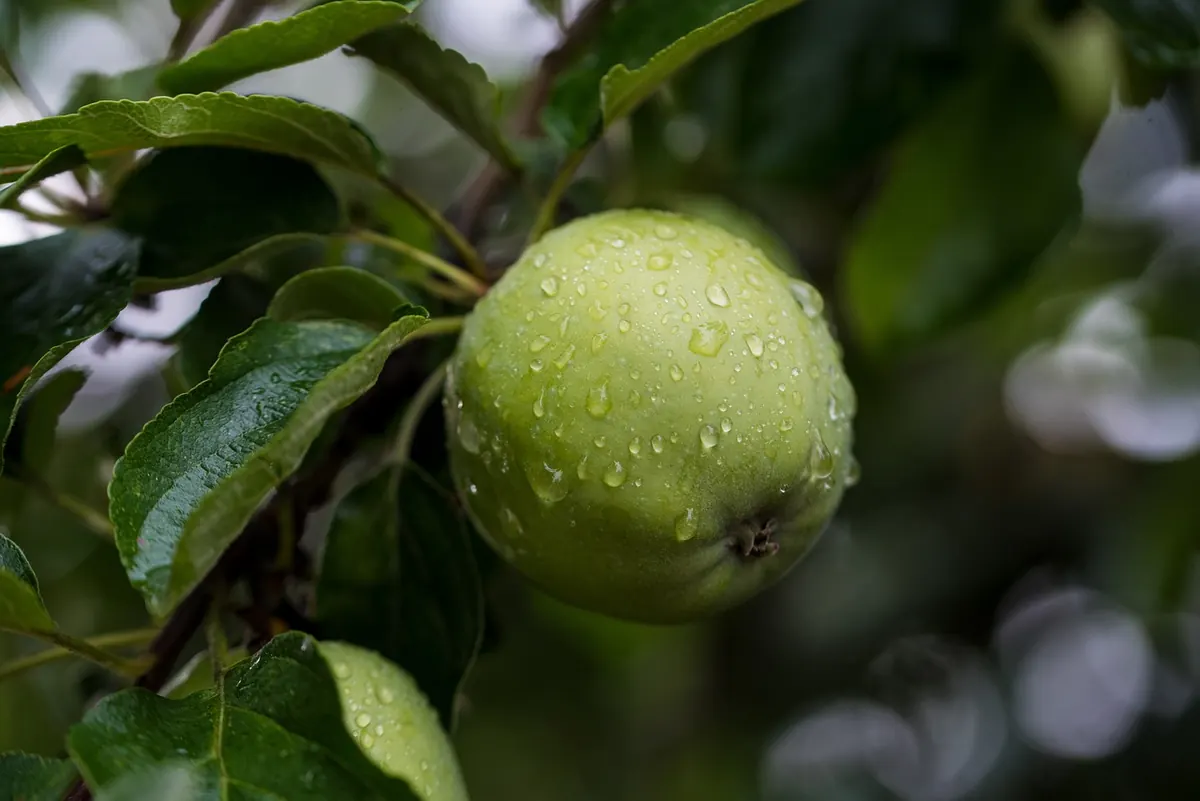
August and September are apple and pear months. Early apples such as Discovery and Worcester Pearmain are ready from late August; keepers like Bramley and Egremont Russet come later. To test an apple, cup it in your hand and lift. If the stalk separates easily, it is ready. Apples continue to ripen after picking, but early varieties are best eaten soon. Late varieties store well in a cool, dark, frost-free place.
Pears need more care. They ripen from the inside out, so a pear that feels firm at the neck may already be soft at the core. Pick when the stalk snaps cleanly and the skin is mature but not fully coloured. Ripen at room temperature, checking the neck each day. When it gives slightly, the pear is ready. If you want to hold them, keep them cool, then bring them out a few days before eating.
Blackberries and damsons appear in hedgerows and gardens. Blackberries should be fully black and come away with a gentle pull; they do not ripen after picking. Damsons are best picked when deeply coloured and slightly soft. They can be ripened on a tray at room temperature, but they are usually destined for gin, jam or chutney.
Autumn and Winter: Quince, Medlars, Sloes and Stored Fruit
October and November bring quince, medlars and sloes. Quince turns from green to yellow and becomes intensely fragrant. It does not ripen after picking in the way a pear does, but it will soften and become easier to cook if left in a cool room. It is too hard and astringent to eat raw; roast, poach or make membrillo.
Medlars are picked after the first frosts and then bletted, not ripened. Store them stalk-down in a cool place until they turn brown and soft. At that point they are ready to scoop and eat, or to make into jelly.
Sloes for gin are traditionally picked after the first frost, or frozen overnight, which softens the skin. They are not eaten raw. Late apples and pears carry you through winter. Check stored fruit every week and remove any that are rotting; one bad apple really can spoil the box. Forced rhubarb returns in January, and the cycle starts again.
How to Ripen Fruit After Picking
Use this quick guide to decide what to do with your harvest.
- Non-climacteric fruits — strawberries, raspberries, blackberries, cherries, currants and gooseberries — will not ripen further. Chill them, eat them, freeze them or cook them.
- Climacteric fruits — apples, pears, plums, gages, damsons, apricots, peaches and nectarines — can be ripened at room temperature. Spread them in a single layer.
- Paper bag method: place firm plums, pears or apricots in a paper bag with a ripe banana or apple. Fold the top loosely. Check daily.
- Temperature: most fruit ripens best at around 18–22°C. A fridge slows ripening, so refrigerate only once the fruit is ready.
- Ethylene: ripe bananas and apples release ethylene gas, which speeds up ripening. Keep them away from produce you want to stay fresh.
- Wash later: washing removes the natural bloom and encourages mould. Wash just before eating or cooking.
Not every fruit follows the rule perfectly. Figs are best picked when soft and drooping; they rarely improve after picking. Tomatoes are climacteric but are not a UK orchard crop, though the same paper-bag trick works. When in doubt, taste one.
Pick, Ripen and Preserve: A Practical Closing
Start with a small picking basket and a notebook. Note when your local trees and bushes ripen; your own calendar will soon be more accurate than any national guide. Pick into shallow containers, keep fruit cool and dry, and sort it as soon as you get home. Eat the ripest first, ripen the firm ones on the counter, and preserve the rest. If you are making jam or chutney, follow a tested recipe and sterilise your jars properly. Fruit that is mouldy or fermenting should go on the compost, not into the pan. With a little practice, you will waste less and taste more.
Photo: keyouest / Pixabay